How to Determine the Optimal Calcination Temperature for VOC Catalysts?
A company specializing in the R&D and production of a series of environmentally friendly catalytic materials, including
ozone decomposition catalysts, carbon monoxide catalysts, hopalat agents, manganese dioxide, copper oxide, VOC catalysts, and hydrogen peroxide catalysts, is compiling information to provide highly adaptable catalytic material solutions for various environmental governance scenarios. We hope this information will be helpful.
Our main customer base includes: industrial waste gas treatment companies, ozone purification equipment manufacturers, environmental protection companies in the automotive, shipbuilding, exhaust gas treatment, petrochemical, and chemical industries, coating, printing, VOCs treatment, municipal and industrial wastewater treatment companies, flue gas treatment companies in the metallurgical and thermal power industries, laboratory and enclosed space air purification equipment manufacturers, and environmental engineering EPC and O&M companies.
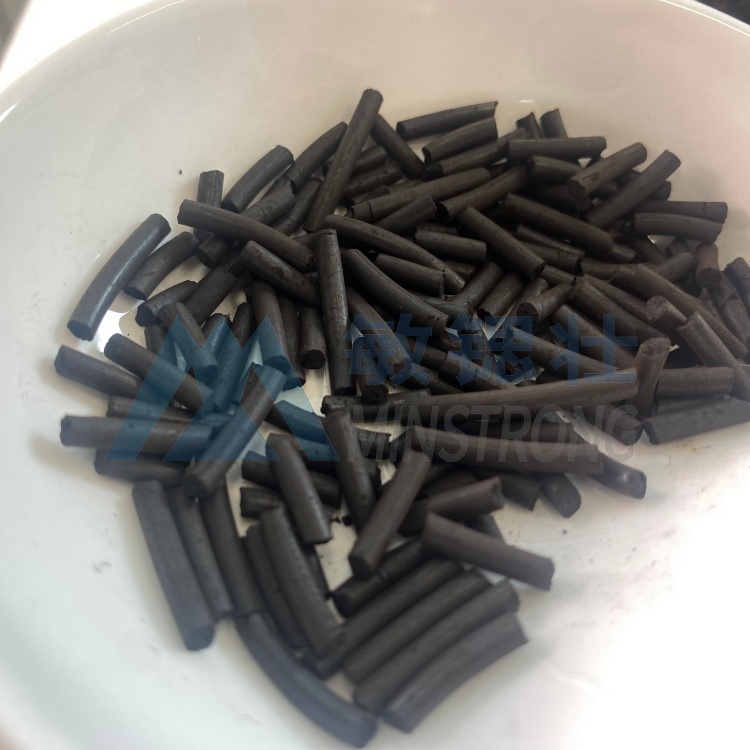
In VOC catalytic purification processes, the performance of the VOC catalyst directly affects the waste gas treatment effect. The calcination temperature, as a core parameter in the preparation process, cannot be arbitrarily set based on experience; it must be precisely determined using scientific methods to balance catalyst activity and long-term stability.
The first step in determining the optimal calcination temperature for a VOC catalyst is to use TG-DSC thermogravimetric analysis to identify the decomposition temperature and phase transition temperature of the catalyst precursor, thus narrowing down the approximate temperature range (typically 300–600℃). The calcination initiation temperature is approximately 50℃ above the complete decomposition temperature of the precursor, effectively avoiding incomplete conversion of active components due to low temperatures.
The second step is to conduct gradient calcination experiments, which is the most direct and accurate method. Typically, gradient temperatures of 350℃, 400℃, 450℃, 500℃, 550℃, and 600℃ are set, and the catalyst is treated under the same calcination time and atmosphere. Subsequently, its VOC conversion rate, ignition temperature (T50), and complete conversion temperature (T90) are measured. The temperature with the lowest T50 and T90 and the highest conversion rate is the optimal activity temperature.
The third step requires structural characterization verification using XRD, BET, and SEM to ensure that the catalyst forms a complete target crystalline phase at the selected temperature, free of impurities, with the largest specific surface area, fine and dispersed grains, and no obvious sintering or agglomeration. This avoids prioritizing activity at the expense of structural stability.
Finally, the catalyst's stability in practical use needs to be confirmed through high-temperature aging and water vapor resistance tests, tailored to industrial operating conditions. For commonly used manganese-cerium and copper-manganese VOC catalysts, the optimal calcination temperature is typically between 400 and 500°C.
In summary, by following the process of "thermogravimetric analysis to determine the calcination range, gradient activity determination, structural characterization to verify structure, and operational stability verification," the optimal calcination temperature for VOC catalysts can be accurately determined, helping companies optimize their preparation processes and improve VOC purification efficiency.
Author: Hazel
Date: 2026-02-25


