Language:


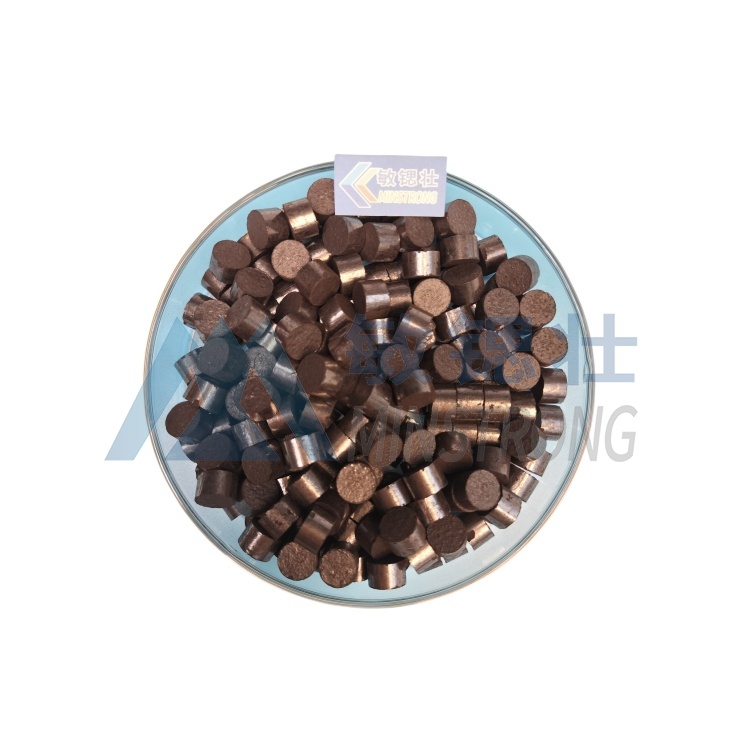
Exhaust gas pretreatment is the most important yet most easily overlooked aspect of daily maintenance. Industrial exhaust often contains particulate matter, paint mist, oil mist, high-boiling organics, as well as poisons such as sulfur, phosphorus, chlorine, and silicon. If these enter the catalyst bed directly without filtration, they will form a physical covering layer on the catalyst surface or undergo irreversible chemical reactions, leading to rapid loss of active sites.
Key daily maintenance points:
The pretreatment system itself also requires regular maintenance – replace baghouse filter bags every six months to one year, and replace dry filter media based on pressure drop changes. Failure of any pretreatment link will cause irreversible catalyst damage in a short period.
Non-standard start-up and shutdown are the primary human factors leading to abnormal catalyst deactivation. Many users only focus on parameters during operation but neglect protection during start-up and shutdown stages.
Precautions during start-up:
Precautions during shutdown:
Post these operating procedures on-site and conduct regular training and assessments for operators to prevent random operation based on experience.
Establish a daily monitoring log, recording at least the following three key parameters each day and comparing them with historical trends.
Measure the inlet and outlet concentrations at least once a week using a portable VOCs detector or online monitoring system. Initial efficiency is typically above 95%. If efficiency continuously drops below 85% and cannot be restored by adjusting operating temperature or increasing airflow, the catalyst activity has significantly declined.
The normal operating temperature of catalysts is generally between 200-400°C. Check the temperature readings at various points on the bed daily, noting two points:
Record the pressure drop across the catalyst bed (inlet to outlet) weekly. Under normal operation, the empty-bed pressure drop is typically between 500-1500 Pa. If the pressure drop suddenly rises more than 20% above the initial value, it usually indicates that catalyst channels are blocked by dust, carbon deposits, or high-boiling substances. If the pressure drop abnormally decreases, there may be gas bypass or catalyst damage.
Additionally, once a month open the equipment access port and visually inspect the catalyst surface condition: obvious dust accumulation, color changes (e.g., from dark brown to grayish-white may indicate poisoning), mechanical damage, or sintered agglomerates.
When the above monitoring parameters show abnormalities, quickly determine the type of deactivation before taking targeted measures. Three common types of deactivation in daily maintenance:
Manifestation: increased pressure drop, decreased efficiency, but little temperature change. Response: Use low-pressure compressed air at 0.3-0.5 MPa for back-blowing, or remove the catalyst and gently tap to remove loose dust. For carbon deposition, perform thermal regeneration.
Manifestation: rapid efficiency decline that is difficult to recover even by raising temperature, and abnormal colors appear on the catalyst surface (e.g., blackening may indicate sulfur poisoning; whitening may indicate chlorine or silicon poisoning). Response: For sulfur or chlorine poisoning, mild cases may try high-temperature thermal regeneration (500-600°C) with special atmosphere; severe poisoning cannot be regenerated and must be replaced. The core of daily prevention is to strengthen pretreatment and prevent poisons from entering.
Manifestation: permanent efficiency decline, glassy or coarsened particle appearance on the catalyst surface. Response: Cannot be repaired; only replacement. In daily operation, avoid over-temperature operation and install high-temperature alarm interlocks.
If efficiency drops and the cause is unclear, do not blindly perform chemical cleaning or high-temperature regeneration. First contact the catalyst supplier for laboratory diagnosis.
In daily maintenance, timely regeneration of reversible deactivation is the most economical means to extend catalyst life.
Close the exhaust valve, introduce fresh air, and heat the catalyst bed to 250-300°C (for carbon deposits) or 500-600°C (for mild poisoning), hold for 6-8 hours. The heating rate must not exceed 5°C/min. Perform preventive thermal regeneration monthly or quarterly to effectively remove carbon deposits.
For specific metal ion deposits or alkaline fouling, soak in dilute acid or dilute alkali solutions. However, frequent chemical cleaning is not recommended in daily maintenance because residual cleaning agents may cause secondary damage.
Replace the catalyst promptly when any of the following conditions occur:
Note during replacement: spent catalyst is hazardous waste (HW49 category) and must be sealed, collected, and disposed of by a licensed hazardous waste treatment facility. Do not discard arbitrarily. Store new catalyst in a dry, light-protected, moisture-proof environment.
Establish a "one machine, one file" maintenance log, recording daily operating parameters, weekly efficiency test data, each thermal regeneration operation, and replacement records. Through systematic daily maintenance, the actual service life of VOC catalysts can be extended by 30%-50%, significantly reducing the overall environmental treatment costs for enterprises.
Contact: Candyly
Phone: +8618142685208
Tel: 86-731-84115166
Email: sales@minstrong.com
Add: E2 Building, Kinglory Science And Technology Industrial Park, Wangcheng Area, Changsha, Hunan, China.