Language:


II. Matching of Active Components: Boundary Conditions Between Precious and Non-Precious Metals
Pt and Pd exhibit high activity at low temperatures (T₉₀ down to 180℃) for aromatic hydrocarbons and esters, making them suitable for low-concentration, non-toxic applications; however, once the sulfur concentration in the exhaust gas exceeds 5 ppm or the chlorine concentration exceeds 50 ppm, these precious metals will deactivate within hours. Transition metal oxides (Mn, Cu, Ce, V) exhibit stronger resistance to poisoning. For example, V₂O₅/TiO₂ maintains a conversion rate of >90% for chlorobenzene at 300℃, and the generated Cl₂ can be removed by alkaline washing. For nitrogen-containing VOCs (pyridine, nitriles), WO₃ or MoO₃ needs to be added to inhibit NOx formation. When the waste gas composition is complex and contains mixed poisons, a two-component or multi-metal oxide system (such as Ce-Mn solid solution) can be constructed.
III. Support and Coating Design: Thermal Stability and Mass Transfer Efficiency
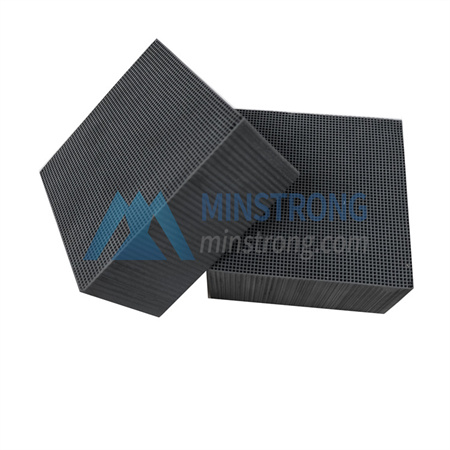
The support not only provides specific surface area but also affects catalyst lifetime. High specific surface area γ-Al₂O₃ (>200 m²/g) is suitable for low space velocity, clean waste gas, but its acidic sites can catalyze the formation of carbon deposits from halogenated VOCs. TiO₂ supports exhibit better SO₂ tolerance than Al₂O₃ and show a synergistic effect with V₂O₅, making them the mainstream choice for treating sulfur/chlorine-containing waste gases. Honeycomb ceramic supports (cordierite) can reduce pressure drop, but require pre-coating with an active coating (washcoat) to ensure adhesion strength. For conditions with large concentration fluctuations, mesoporous molecular sieves (such as SBA-15) can provide a confinement effect, preventing metal particle sintering. Support wall thickness and porosity need to be adjusted according to space velocity (5000–30000 h⁻¹) to avoid external diffusion control.
IV. Concentration and Thermal Effects: From Kinetics to Thermal Management
The oxidation of high-concentration VOCs (>1% LEL) releases a large amount of heat, potentially causing bed temperatures to exceed 600℃, leading to catalyst sintering. In such cases, perovskite (LaCoO₃) or hexaaluminate supports with high thermal stability should be selected, combined with waste gas recirculation or multi-stage bed design. For low concentrations (<200 mg/m³), enhanced mass transfer is necessary, employing thin-coated macroporous supports (such as metal foam) to reduce internal diffusion resistance. For intermittent emission conditions, noble metal catalysts with low ignition temperatures (<200℃) are preferred, along with a preheating auxiliary system. In practical engineering, the adiabatic temperature rise ΔT = (ΔH·C_in)/(ρ·C_p) must be calculated to ensure ΔT < 150℃; otherwise, dilution or diversion is necessary.
Selection should be made in the following order: ① Qualitative and quantitative analysis of exhaust gas composition → ② Determine if S, Cl, or N are present → ③ Select anti-poisoning components (V, Mn, Ce) or noble metals → ④ Design the support structure and thermal management measures based on concentration and thermal effects. Neglecting any step will lead to rapid catalyst deactivation or substandard combustion efficiency. It is recommended that companies establish exhaust gas composition records and conduct regular small-scale catalyst tests for verification.
author:kaka
date:2026/5/25
Contact: Candyly
Phone: +8618142685208
Tel: 86-731-84115166
Email: sales@minstrong.com
Add: E2 Building, Kinglory Science And Technology Industrial Park, Wangcheng Area, Changsha, Hunan, China.